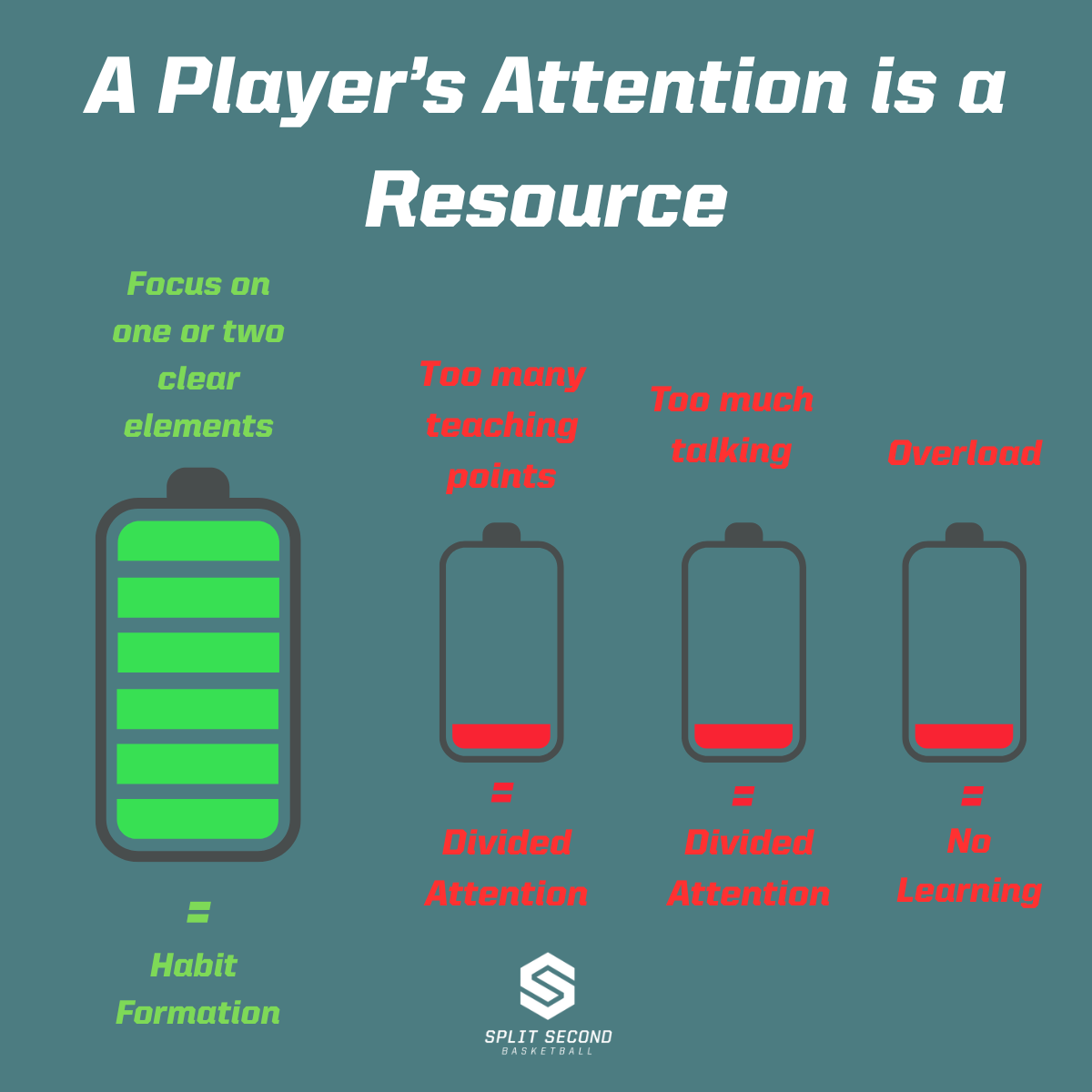
A Player’s Attention is a Resource.
And it is the most important resource a coach needs to control and direct.
A coach’s job is not only to teach skills or run drills, it is to decide where the player’s attention goes.
Too often, coaches misdirect attention. We overload players with too many cues, too many corrections, too many ideas. Attention becomes scattered and when attention is scattered, nothing becomes consistent.
Why does attention matter so much?
Because when a player plays the game while focusing on one clear element, learning becomes possible.
For example, spacing. If spacing is what the player is paying attention to, he will space out consistently. It stays on his mind so he remembers it, and he does it. Now add two more things: many repetitions of the same action, and clear, relevant feedback. When a player repeats the same behavior again and again, while receiving feedback that points to what matters, that behavior stabilizes. After enough repetitions, it no longer requires conscious effort. At that point, we have a habit.
That’s how habits are formed: directed attention, repeated experience, and proper feedback over time. But attention is also fragile.
The moment we ask players to focus on more than one or two things, attention breaks down. Consistency disappears. And without consistency, habits never form. This is why coaches must be intentional about attention. If we want habits, we must first decide where attention goes.
Control attention and development follows.