

Professional Development For Coaches
Building Habits for Long-Term Growth




Our Defensive Habits
Building Habits for Long-Term Growth
At our club, we believe that success stems from consistent, high-value actions. Our goal is to turn these actions into habits—frequent behaviors that players perform almost automatically because they lead to better results, faster reactions, and more creative play. When core skills and smart decisions become habitual, players save energy, show reliability, and unlock freedom to express themselves on the court. Habits are the foundation of both consistency and creativity.
Start with turning your check
At the end of the dribble - Wall Up
When Off ball - “Stay 85”
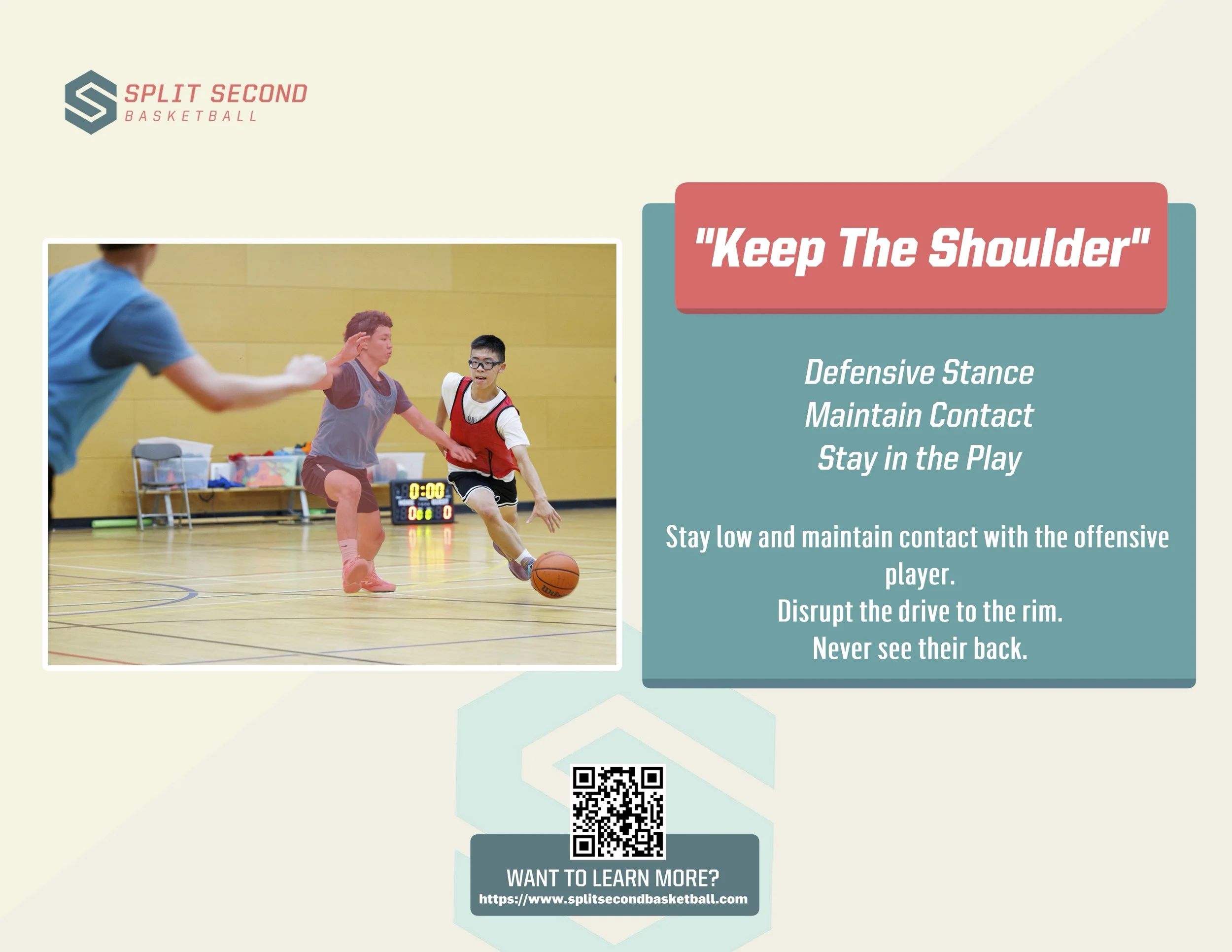
Then make sure you Keep The Shoulder
Then - Box Out - Finish your job
Our Offensive Habits
Building Habits for Long-Term Growth
At our club, we believe that success stems from consistent, high-value actions. Our goal is to turn these actions into habits—frequent behaviors that players perform almost automatically because they lead to better results, faster reactions, and more creative play. When core skills and smart decisions become habitual, players save energy, show reliability, and unlock freedom to express themselves on the court. Habits are the foundation of both consistency and creativity.
Dribble With A Purpose
Play Together and Force Long Closeouts
Make Sure You Alwyas Keep The Spacing!
Coaches’ Roles In practice
How to run an effective practice, and how to do a good meaningful coaching work? Watch these 4 short video episodes on the things you need to do before and during practice.
Part 1: Before the Practice
Part 3: Focus and Feedback
Part 2: Representative Repetitions
Part 4: Holding Players Accountable
Our Seminars
Coaching Seminars
As an organization dedicated to developing young basketball players, we believe in leading by example. Our commitment to excellence begins with ourselves—by continuously growing as professional coaches. Through regular coaching seminars, we create space to learn, reflect, and share best practices. This ongoing development ensures we provide players with the highest-quality guidance, both on and off the court.
Running Effective Practice Sessions
Practical Coaching Tools
Effective Practice Drills
Effective Drills for Purposeful Practice
Gym time is limited, so every drill must count. In this section, you'll find drills designed to be both purposeful and game-representative.
An effective drill puts players under pressure, offers multiple options for action, and requires decision-making based on real-time information — not scripted movements. These drills reflect the realities of the game and help players transfer their learning to live play.
-
2-on-1 Shooting Drill
This drill provides high-repetition, game-like situations for passing, shooting, closeouts, and rebounding. One defender remains in the paint throughout each possession, giving the offense a clear advantage. That structure makes it adaptable and effective for both younger and older players, with the shooting range easily adjustable based on level.Coaches should emphasize:
Boxing out consistently
Closing out under control (without jumping)
Passing away from the defender with sharp timing and awareness
Players enjoy the fast pace, and the continuous action keeps everyone engaged and focused — even when they're not directly on the court.
-
Setup:
2 offensive players start at their appropriate shooting range (typically the 3-point line; adjust for age/ability).
2 defensive players begin in the key — one must stay in the paint at all times, while the other can close out and recover.
The ball starts with the offense.
At least one next defensive team waits behind the baseline, ready to enter.
If more than three teams are present, additional teams wait under the baseline for their turn.
🔹 Drill Execution:
Start of the Possession:
Offense begins with the ball and may only pass or shoot from beyond the 3-point line.
One defender closes out, while the second remains in the paint throughout the possession.
Coach gives a verbal countdown (typically 5 seconds, adjustable for age/level).
After the Shot:
All players crash the boards.
If the offense rebounds, they must pass the ball out beyond the 3-point line (clear it) and resume the possession.
The paint defender must continue to stay inside the key.
If the Defense Rebounds or the Offense Scores:
The next team enters immediately as the new defenders — no stoppage.
One of them must sprint directly to the paint and stay there.
The team gaining possession clears the ball beyond the 3-point line and then attacks the new defense.
If the Entering Team Is Not Ready:
The offensive team may get a quick or uncontested scoring opportunity, emphasizing the importance of readiness and communication from players waiting on the baseline.
-
3-on-2 Decision Drill
This drill expands on the 3-on-2 shooting concept by allowing the offense to dribble and finish inside, creating a more realistic, game-like dynamic. One defender remains in the paint, while the offense works in short, high-intensity five to seven-second possessions that demand quick reads and execution.
👉 For younger age groups, the possession time can be slightly extended to allow for better processing and development.It forces players to make fast decisions both off the catch and off the dribble, offering repeated opportunities for penetration, off-dribble passing, and creative playmaking.
On the defensive side, the drill provides constant reps for closeouts and recoveries, help-side positioning, and real-time communication. Players work on walling up, staying on the shoulder, and boxing out from dynamic situations — covering a wide range of key defensive fundamentals.
The coach should keep the players focused on:
Offense – sharp passes away from defenders, proper spacing, and early passes when driving.
Defense – good closeouts, staying on the shoulder, communication, walling up, and boxing out.This is a well-rounded, high-repetition drill that helps build habits under pressure — for players of all levels.
-
This version is played 3-on-3, with the same defensive structure: one defender must remain in the paint throughout the possession, while the other two defenders are free to close out and rotate. The offense starts with the ball and can dribble, pass, and shoot from anywhere on the court. Scoring follows game rules — 2 points for shots inside the arc, 3 points for shots beyond it. After a shot, all players rebound. If the offense secures the rebound, they are allowed to immediately attempt to score again without clearing. However, after any made basket or defensive rebound, the team gaining possession must clear the ball beyond the 3-point line before continuing play. As soon as the defense gains possession or a basket is made, the next team enters immediately to defend, with one player sprinting directly to the paint. Additional teams wait under the baseline and rotate in when it’s their turn.
-
4v4 Transition – Delayed Entry Offense Drill: Rationale
Like the previous 4v4 transition drill, this format is designed to maximize live reps and minimize wasted time between groups. The continuous flow keeps players active, engaged, and focused throughout.
In this version, the emphasis shifts to offensive transition — pushing players to attack quickly after gaining possessionfrom the defensive half court, before the defense is fully organized.
Defensively, the drill challenges players to:
Match up on the fly
Communicate quickly
Defend without a set structure, similar to situations after an offensive rebound or defensive rotation
This combination of pressure, tempo, and unpredictability replicates real-game scenarios and helps build habits that translate directly to competitive play.
-
4v4 Transition – Two Possessions Drill
One of the biggest time-wasters in practice is the transition between repetitions. This drill is designed to eliminate downtime, creating a continuous flow that keeps players physically and mentally engaged.
The two-possession format not only increases repetition efficiency, but also trains players to stay ready at all times, reacting to unpredictable situations under game-like pressure.
Defensively, it emphasizes:
Quick communication
Finding and matching up fast
Reacting to shifting matchups
Offensively, players must:
Quickly identify and exploit advantages
Act before the opportunity disappears
The second possession allows coaches to customize the scenario based on team needs. In this version, we begin with cutting (emphasis on finishing the cut), followed by a situation that encourages driving to the basket, simulating one of the most common challenges for defenders.
🔹 Coach’s Role: Decide the focus of each segment in advance. Keep instructions clear and consistent, and avoid overloading players with too many teaching points at once.
-
4-on-4 Transition Drill with Game-Rep Start & Match-Up Recovery
🔹 Drill Setup:
Two teams (Team A and Team B) are on the court:
One team starts on offense
One team starts on defense
A third team (Team C) waits just beyond the half-court line (usually on the volleyball line), ready to rotate in.
The drill begins with a specific game-like offensive advantage, designed to emphasize a teaching point (e.g. the ball handler starts with a clear lane to attack, while other players react off penetration).
🔹 Drill Execution:
Initial Possession (Game Situation):
The offense starts with a built-in advantage, such as a live dribble.
The team plays live 4-on-4 until a basket, defensive rebound, or steal ends the possession.
Transition Possession:
When the defense gains possession, they must clear the ball beyond the 3-point line.
As soon as the clearing action begins, the team waiting at half court (Team C) sprints back into the paint to match up and defend.
The former offensive team (Team A) exits to the waiting spot at half court.
The team that was on defense (Team B) now becomes offense and attacks against Team C.
Reset for the Next Rep:
After this transition possession ends (basket or stop), the drill resets to the same starting game situation— now with Team B on offense and Team C on defense.
The coach initiates the next rep by re-creating the original game scenario (e.g. a penetration opportunity), and the flow begins again.
🔁 Rotation Flow:
After each transition possession:
The offensive team from the first rep rotates out to the half-court waiting area.
The defensive team becomes offense, and the waiting team becomes defense.
These two teams then restart the drill from the original scenario setup.
-
3-on-2 Shooting Drill
Building on the same concept as the 2-on-1 drill, this version adds complexity and emphasizes team play and floor spacing. With more players involved, the focus shifts slightly toward passing and decision-making, while still incorporating valuable shooting and rebounding reps.The drill naturally creates more dynamic box-out situations, requiring players to recognize and react to shifting responsibilities — making it a strong fit for both younger and older players. The shooting range can be adjusted as needed to suit the level.
Coaches should focus on:
Perimeter spacing and ball movement
Making the extra pass under pressure
Boxing out in traffic and communication on defense
This drill encourages teamwork, challenges awareness, and keeps the tempo high to ensure consistent engagement.
-
This variation is played 3-on-3, following the same structure as the 2-on-2 version. The offense starts with the ball and is limited to passing and shooting from beyond the 3-point line. One designated defender must stay inside the paint for the entire possession, while the other two defenders are free to close out and defend on the perimeter. After a shot, all six players rebound. If the offense secures the rebound, they must pass the ball out beyond the 3-point line before continuing the possession. If the defense gains possession or if the offense scores, the next team waiting behind the baseline enters immediately to defend. As always, one of the entering defenders must sprint directly to the paint and stay there for the duration of the possession. Additional teams wait under the baseline and rotate in when it’s their turn.
Entry-Level Practice Drills
These drills are designed for players with limited experience and focus on developing fundamental skills in a purposeful, game-like environment. Each drill provides many representative repetitions, helping players build confidence, improve technique, and learn core habits through simple, engaging actions.
-
This drill gives beginner players the chance to practice all the fundamental skills in a game-like context: passing, catching, dribbling, pivoting, and shooting. At this level, players often haven’t developed comfort with using a pivot foot to create passing angles, so it’s important that the coach wiil show it to them and explain it’s purpose.
The drill is simple enough for beginners, but still competitive, purposeful, and representative of real basketball situations.
Young players need many repetitions of essential actions—receiving the ball under control, pivoting to create space, making a strong pass, dribbling with purpose, and finishing.
Traditional “line-based” drills create lots of waiting time and very few purposeful reps.
This 2-on-1 setup:
Forces players to make quick decisions under a small dose of pressure
Teaches how to pass out of trouble using pivots
Keeps possessions short and purposeful
Creates a realistic challenge that translates to games
Allows coaches to easily adjust level and tempo
Transitions between reps can waste a lot of time at this age, so the drill is designed to run continuously, with one fixed defensive pair staying in to defend for multiple rounds. This keeps players active and minimizes confusion.
-
Setup
• Divide players into groups and use different colored pinnies to immediately identify teams. This is essential for young players with short attention spans; clarity reduces confusion and keeps all attention on the drill.
• Use one basket per group.
• Create one defensive pair-they stay in for a set amount of time (e.g., two full rotations) before switching. Each has a ball.
• All other players form offensive pairs.
• Offensive pairs start on the perimeter (coach decides exact spots based on level).
This structure ensures:
• No delay between possessions
• Each offensive pair is ready the moment the previous rep ends
• Consistent rhythm and maximal reps
⸻
Drill Execution
1. Start of the Possession
• A defensive player begins inside the arc, ready to guard two offensive players.
• The offensive pair begins once the defensive player passes the ball to them.
• The offense plays live 2-on-1.
2. Offensive Objectives
3. Time Limitation
To ensure pace, urgency, and purposeful decision-making:
• Limit each possession to 4–7 seconds
• Adjust the timer based on level
• Shorter time = more urgency, more reps, less drifting
5. Rotation
• Offense goes to the end of the line, and the defensive pair comes out after completing their full defensive shift (e.g., two rounds of defending every group).
• This removes wasted time figuring out who attacks next and keeps the drill flowing nonstop.
• Minimize waiting time between reps—next pair should be ready before the previous possession ends.
-
1-on-1 Skills Drill
For young or beginner players, simple actions like dribbling into the paint and finishing at the rim are essential for building competence and confidence. However, we want to avoid traditional “up-and-down” drills that lack purpose and don’t translate well to real game situations.
This 1-on-1 setup provides the right level of challenge for entry-level players while still being representative, competitive, and purposeful. Players must dribble under control, and finish with pressure - all skills directly connected to real play.
The difficulty of the drill is easy to adjust: coaches can change cone positions, starting angles ( corner, wing), or spacing to match the players’ age and ability.
-
Setup
With young players and shorter attention spans, clarity is critical.
Start the session by dividing players into small groups and giving each group a different color pinnie. This prevents confusion about teammates and opponents and makes the drill easier to manage.
The offensive player starts with the ball, facing the rim.
Coaches may place the offensive start point in different locations (top, 45°, corner) depending on the emphasis.
The defender starts directly in facing the offensive player.
Place two cones-one on the left and one on the right.
The defender will run around whichever cone they choose.
A closer cone = higher difficulty for the offense.
A farther cone = more time and advantage for the offense.
Extra players wait behind their teammate in a single file, ready to rotate quickly.
Drill Execution
1. Start of the Possession
The defender initiates the action by choosing a cone and sprinting around it.
The moment the defender starts moving, the offensive player immediately begins driving to the rim.
Emphasize key dribbling habits:
Eyes on the rim, not on the ball
Hard, controlled dribbles at waist height
Staying balanced and under control through the drive
2. The Finish
The offensive player must finish inside the paint.
3. Rotation
After the play ends, players rebound and reset.
At the Skills / beginner level, rotation is simple:
Offense becomes defense, defense becomes offense - every repetition - regardless of who scored.
This ensures equal reps and predictable structure for young players.
As soon as one pair starts, the next pair steps in immediately to minimize downtime and keep the drill flowing.
