

Basketball Coach Development in Vancouver
Great youth basketball starts with great coaches. Every Split Second coach learns the same clear job, to help players and teams build Winning Habits, and gets real support to get better at it: seminars before every season, our online coach development course, the Coach Handbook, and time on the court with our Head of Professional Development.
- Every seasonCoaching seminars before each season
- 2Coaches who started with us now lead university programs
- 35+Of our players now play post-secondary basketball
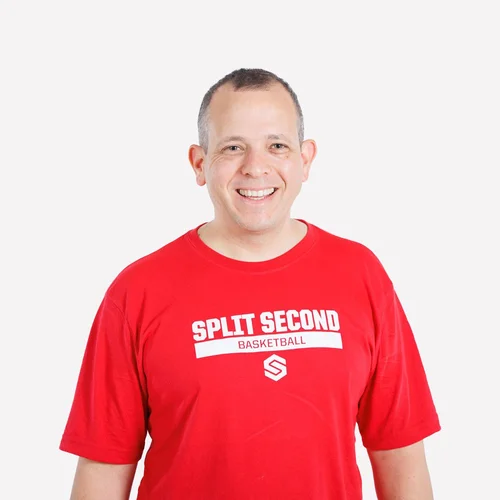
Daniel Shashar
Daniel has coached basketball at every level since he was 16. He built his career in European basketball: an assistant coach with a professional team that reached the semi-finals of the 2005 ULEB Cup, six times named coach of the year in his country's Division 1 U18 National League, and Professional Development Director and CEO of a professional club's youth program. He holds a BA in Psychology and Education and a master's degree in education leadership.
A Search That Went Around the World
When we went looking for a Head of Professional Development, we reached out to about 500 graduates of the FIBA Europe Coaching Certificate. Daniel was our top-rated candidate, even though he lived on the other side of the world. We convinced him to bring his family to Vancouver, and we couldn't be happier that he did.
"His impact on us has been transformative. He's made every one of us better coaches, mostly by giving us a much clearer picture of what coaching actually is, and what our main purpose is."Eric Butler, founder
Seminars Before Every Season
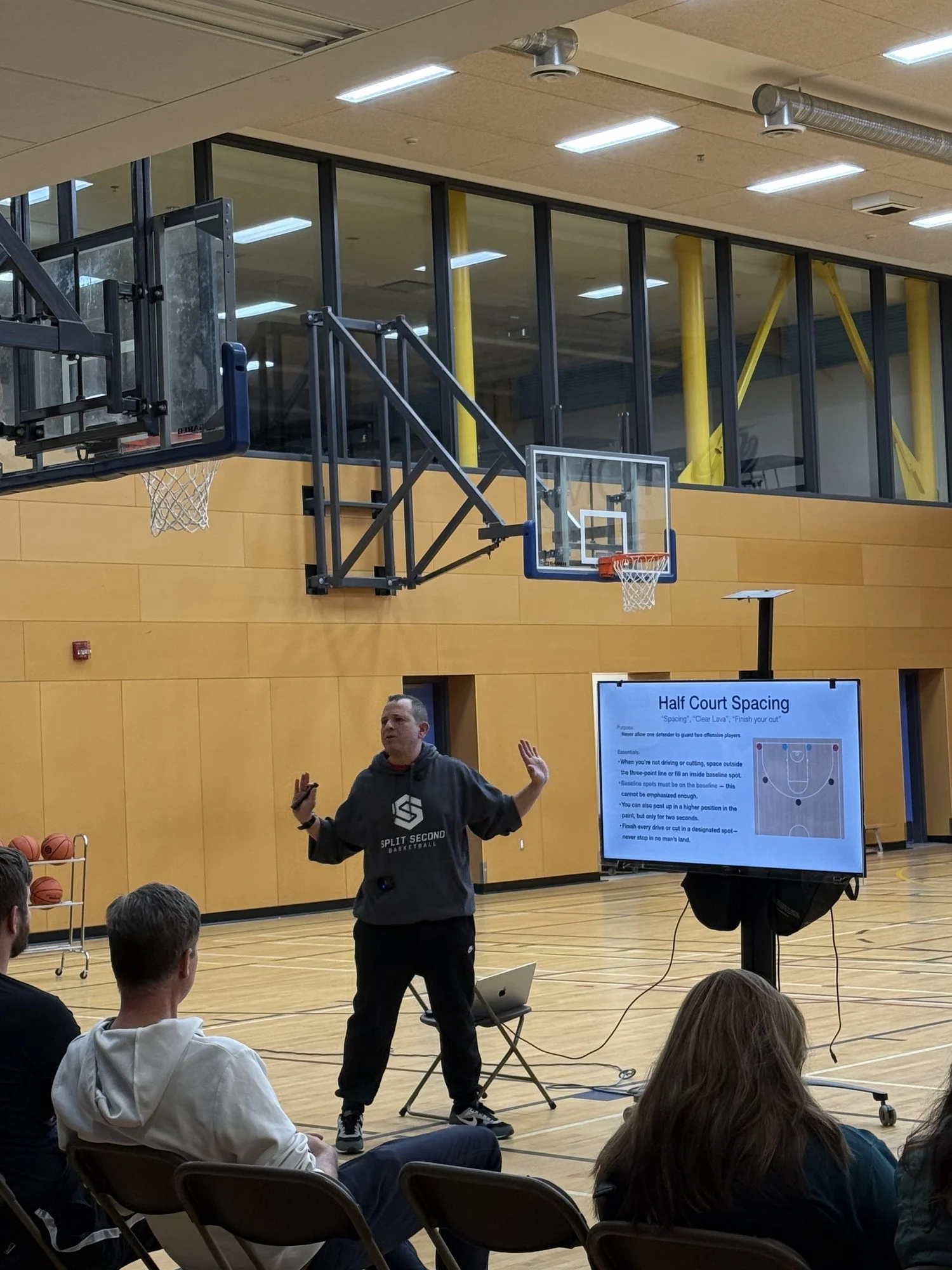
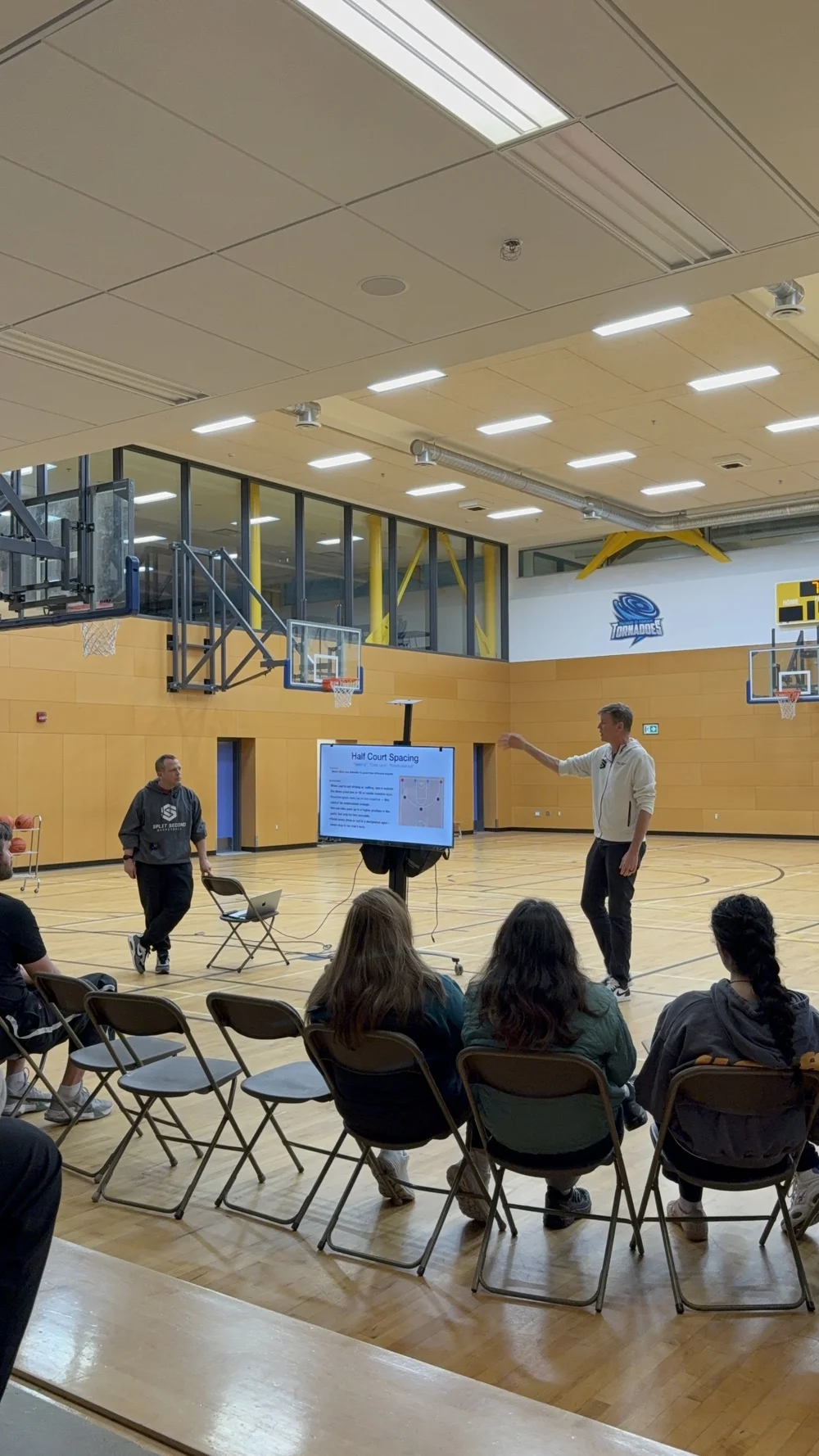
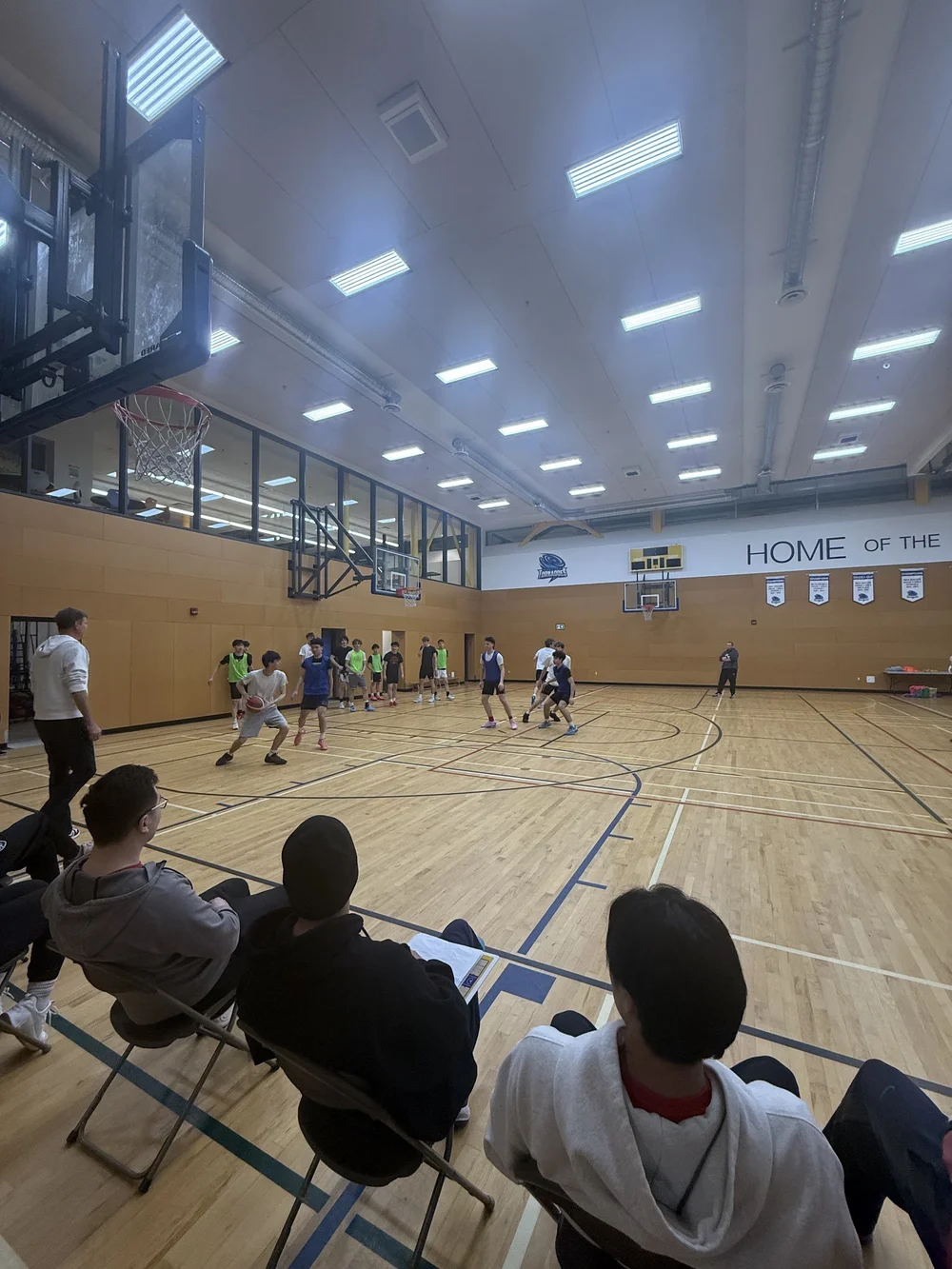
Before each season, our coaches come together for coaching seminars, in the classroom and on the court with players. Recent seminars, led by Daniel, covered how we coach ourselves, how we communicate on the court, and how we build offence through habits and principles instead of plays. Seminar time is built into every Cobra coach's season, and every coach is encouraged to come.
Open to Community Coaches
Our seminars aren't just for Split Second coaches. We open them to community coaches, from high schools to elementary schools, because we want kids to have a better basketball experience wherever they play. Several dozen community coaches have joined us, and we invite them every year. Want to be on the invite list? Email Daniel at daniel@splitsecondbasketball.com.
The Online Course and the Coach Handbook
Split Second Coach Development Online Course
Our online course teaches the how of coaching the Split Second way: start with the purpose, give lots of game-like reps, hold players accountable, and give feedback on the action, not the outcome. Coaches work through it at their own pace.
Interested in getting access? Email daniel@splitsecondbasketball.com.
The Coach Handbook
One place for everything a Split Second coach needs:
- Our coaching philosophy
- What a great session looks like
- Our coaching standards
- The 12 Winning Habits
- Our core values
- Emergency and safety procedures
- Gym entry and exit, gym by gym
- Pay, schedules and who to ask
The Coach Handbook is password protected for Split Second coaches, because it holds our own material and gym access details.
Watch and Be Watched
Some of the best coaching development happens in the gym, side by side with our Head of Professional Development.
- Watch with purposeCome and watch another coach's practice with your mind engaged, looking for what they do and why it works.
- Break it down togetherSit down with Daniel afterwards and analyze what you saw: the purpose, the reps, the feedback, how players responded.
- Get watchedAsk Daniel to watch your practice, then debrief together on what to keep, what to change and what to try next.
Good Coaches Become Great Coaches
Helping good coaches become great coaches is the most important part of what we do. It isn't a promise on a page. Coaches who started with us now lead university programs.
Geoff Pippus
Spent eight years as a player development coach with Split Second before being named head coach of the Golden Bears men's basketball team in 2025.
Eric D'Andrea
Coached with Split Second from 2016 and led our Cobra program before being named head coach of Vancouver Island University's men's basketball team in 2026.
Room to Grow
Many coaches work in more than one program, from Skills Training to Academy and Cobras. As we grow, we look first to coaches who take coaching seriously, and pay grows with skills, commitment and responsibility.
Outside Learning
Find a great coaching course or clinic somewhere else? Ask us. Split Second can help pay for coaching development that makes you better.
Your Path
Tell your program head where you're at and what you want out of coaching. Coming to seminars and asking for feedback are the best signs you're serious.
One Clear Job: Build Winning Habits
Not running drills. Not teaching complex offences. Not passing on everything we know about the game. Our coaches build Winning Habits through Guided Gameplay and Focused Feedback.
Purpose First
Decide the end goal before choosing an activity ("players box out as a habit", not "let's do a box out drill"), then ask of every drill and every piece of feedback: does this get us there?
Many Game-Like Reps
About 80% of practice is live play against real defenders. A rep counts when it could happen in a game. Talk less, keep possessions short, and aim for about two game-like reps per player per minute.
Hold Players Accountable
Effort isn't instinctive, and habits need it. Say clearly what you expect and use real consequences in games: a turnover for aimless dribbling, or lost points for a lack of effort.
Feedback on the Action
Praise the right pass even if it's dropped. Correct the bad shot even if it goes in. In each practice, focus on one or two habits, and stay on them for a few weeks until they stick.
The focus comes with a trade-off: there's a lot we deliberately don't spend time on, like walking through a complicated 2-2-1 press break or running a 3-man weave. See the full plan on our Winning Habits page.
What Every Split Second Coach Does
- Come prepared.Know the plan, the points of emphasis and why each activity is there. Help set up the gym.
- Know your players.Learn their names, greet them when they arrive, and talk with them at breaks.
- Stay in it.On your feet, phone away, no long breaks and no shooting while players play.
- Look after them.If a player is upset or uncomfortable, go out of your way to sort it out.
Coaches' Roles in Practice
Four short episodes from Daniel on what to do before and during practice.
Before the Practice
Decide the purpose first, then plan every activity around it.
Representative Repetitions
Reps that look like the game: a defender, a decision, real pressure.
Focused Feedback
Feedback on one or two things, aimed at the action, not the outcome.
Holding Players Accountable
Effort isn't instinctive. Clear expectations and real consequences in games.
From Our Seminars
Running Effective Practice Sessions
Daniel Shashar on building practices with more reps, more decisions and less standing around.
Practical Coaching Tools
From our February seminar: tools coaches can take straight into their next practice.
The 12 Winning Habits
Every Split Second coach teaches the same 12 Winning Habits, so nothing is wasted as a player moves from program to program. See the diagrams, cues and our full plan on the Winning Habits page.
The Habits on Video
Turn the Ball
Keep the Shoulder
Gap: No In Betweens
Wall Up
Box Out
Floor is Lava
Force Long Closeouts
Dribble with a Purpose
Effective Drills for Purposeful Practice
Gym time is limited, so every drill has to count. A good drill puts players under pressure, gives them options and asks them to decide in real time, not run scripted moves. That's what helps them carry it into games.
2-on-1 Shooting
Fast, game-like reps for passing, shooting, closeouts and rebounding. One defender stays in the paint, so the offence has a clear advantage and the range adjusts to any age.
- Box out on every shot
- Close out under control, without jumping
- Pass away from the defender, on time
3-on-2 Shooting
Builds on the 2-on-1 with more players, more passing and more decisions, and creates box-out situations that keep changing.
- Spacing and ball movement
- The extra pass under pressure
- Boxing out in traffic and talking on defence
3-on-2 Decision
Short, five to seven second possessions where the offence can drive and finish. Constant reps for closeouts, help defence and quick reads.
- Sharp passes away from defenders
- Wall up, keep the shoulder, box out
- Early passes when driving
4-on-4 Transition: Two Possessions
Cuts the downtime between reps. Two possessions in a row keep players ready, matching up fast and reacting to new situations.
- Quick communication and matching up
- Spot and use an advantage before it disappears
4-on-4 Transition: Delayed Entry
Players attack before the defence is set, and defenders learn to match up on the fly without a set structure.
- Push the ball after gaining possession
- Talk and match up on the fly
For Beginners
2-on-1 Passing and Pivoting
Beginners practise catching, pivoting, passing, dribbling and finishing under a small dose of pressure, instead of waiting in lines. Show them how to pivot to create a passing angle, and why.
1-on-1 Skills
Dribble into the paint and finish with a defender close by. Simple, competitive and connected to real play. Move the cones or starting spots to fit age and ability.
Coach Development Questions
What does coach development look like at Split Second Basketball?
Every coach learns one clear job: help players and teams build Winning Habits, through Guided Gameplay and Focused Feedback. We teach it through coaching seminars before each season, the Split Second Coach Development Online Course, our Coach Handbook, and time on the court watching practices and breaking them down with our Head of Professional Development.
Who leads coach development at Split Second?
Daniel Shashar, our Head of Professional Development. He built his career in European basketball as Professional Development Director and CEO of a professional club's youth program, an assistant coach with a professional team that reached the semi-finals of the 2005 ULEB Cup, and six times coach of the year in his country's Division 1 U18 National League. He is a graduate of the FIBA Europe Coaching Certificate and the International Coaching Apprenticeship in Basketball. We found him by reaching out to about 500 FIBA Europe Coaching Certificate graduates; he was our top-rated candidate.
How often do you run coaching seminars?
Before each season. New coaches, coaches returning after time away and coaches starting a new program are invited every time, and seminar time is built into every Cobra coach's season. Our spring 2026 seminar ran over two evenings. We also invite community coaches every year; email daniel@splitsecondbasketball.com to join the invite list.
What is the main job of a youth basketball coach at Split Second?
To help players and teams build Winning Habits. Not to run drills, teach complex offences or pass on everything we know about the game. About 80% of practice is live play, and in each practice coaches focus on one or two of our 12 Winning Habits, staying on them for a few weeks until they stick.
How do coaches grow at Split Second?
By coming to seminars, asking questions, watching other coaches' practices and asking Daniel to watch theirs. As we grow, we look first to coaches who take coaching seriously, and pay grows with skills, commitment and responsibility. If a coach finds an outside development opportunity, we can help pay for it.
Can community coaches come to your coaching seminars?
Yes. We open our seminars to community coaches, from high schools to elementary schools, because we want kids to have a better basketball experience wherever they play. Several dozen community coaches have joined us. To get on the invite list, email Daniel at daniel@splitsecondbasketball.com.
Have Split Second coaches gone on to coach at university?
Yes. Geoff Pippus spent eight years as a player development coach with Split Second and is now head coach of the University of Alberta Golden Bears. Eric D'Andrea coached with us from 2016, led our Cobra program, and is now head coach of the VIU Mariners men's basketball team.
Are your coaching videos and drills free to use?
Yes. Everything on this page is free for any coach. Use the drills, share the videos, and tell us what works for your team.
I want to coach with Split Second. Where do I start?
See our Coaching Opportunities page. We're always looking for coaches who care about kids, want to keep getting better and are excited to teach the game this way.
Coach With Split Second
We're always looking for coaches who care about kids, want to keep getting better, and are excited to teach the game this way.