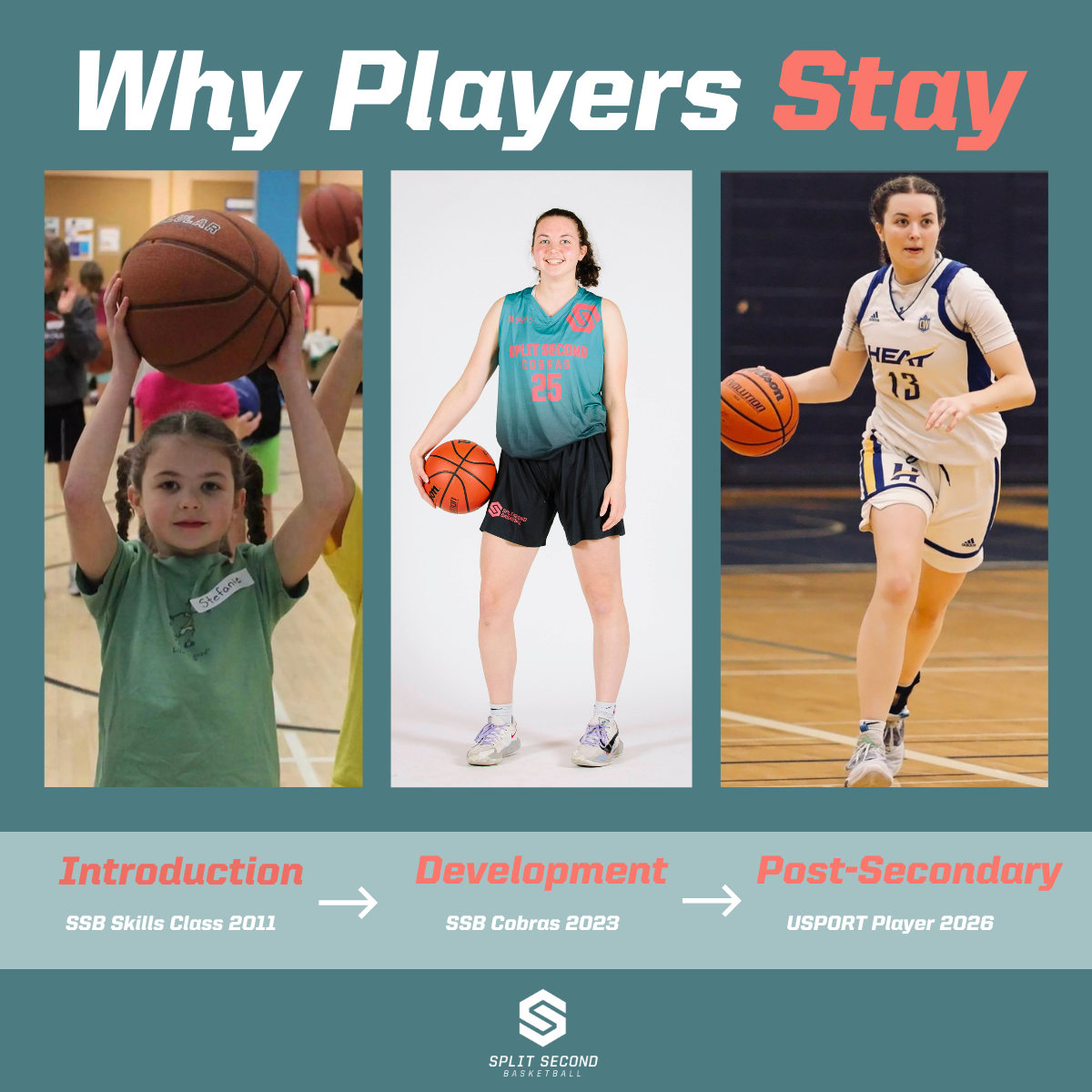
Why Players Stay - A Coach’s Role
One of a coach’s most important jobs is to keep players in the system. So the question now becomes:
How do we actually do that?
How do we get young players to want to come back, week after week, year after year?
According to well-established motivation theories, people are generally looking for three core things:
• A sense of belonging
• A sense of autonomy
• A sense of competence
And we would add a fourth one, especially for young players:
• A place to use their energy
Young players have a lot of energy.
If they don’t get to use it in practice, they’ll use it somewhere else, or they’ll disengage.
So if you want players to stay with you, you must create an environment where they:
• Feel competent
• Feel they belong
• Feel they have autonomy
• And have a real opportunity to move, play, and burn energy
Now the important part is this:
How do we actually create these things in practice?
Once again, it starts with purpose.
When everything we do has a clear purpose, players can succeed, and success creates motivation.
Here is a simple example.
Tell the players:
“Score using no more than three dribbles.”
Immediately, a few things happen.
First: competence.
It’s very clear whether they succeeded or not.
If they scored and used only three dribbles, they achieved the task.
That feeling of “I did it” matters a lot.
Second: autonomy.
You’re not telling them how to score.
You’re not giving them a solution.
You’re giving them a problem.
They get to decide:
• How to attack
• When to shoot
• Which move to use
That’s autonomy.
So just by defining a clear purpose and not over-instructing, you’ve already covered two major motivational needs:
• Competence
• Autonomy
Now what about belonging?
Belonging comes from the environment you create.
A good team environment means:
• Everyone feels respected
• Everyone feels seen
• Everyone feels heard
And most importantly,
The coach sets the example.
How you talk to your assistant coaches
How you talk to players
How you respond to mistakes
How you handle frustration
All of that teaches players whether this is a place they want to belong to.
When players feel safe, respected, and valued, they want to be part of the group.
And finally: energy.
Young players don’t want to sit.
They don’t want long explanations.
They want to move.
How we use energy, and how we design practices to support that is something we’ll talk about in a bit.
But the key idea here is simple:
When we work with purpose,
we give players clear goals,
freedom to solve problems,
a sense of success,
and a team they want to belong to.
That’s how motivation is built.